
Demyelinating Disorders of Brain & Spinal Cord
Demyelinating Disorders of Brain & Spinal Cord
Demyelinating disorders are neurological conditions in which the protective covering of nerve fibers (myelin) in the brain and spinal cord becomes damaged. Myelin helps in the fast and smooth transmission of electrical signals between the brain and the body. When it is destroyed, nerve communication slows down or gets blocked, leading to various neurological symptoms. These conditions may develop suddenly or gradually and can significantly affect daily functioning.
Common demyelinating disorders include Multiple Sclerosis, Neuromyelitis Optica, Acute Disseminated Encephalomyelitis, and Transverse Myelitis. Many of these are autoimmune in nature, where the body’s immune system mistakenly attacks healthy nerve tissue.
Symptoms vary depending on the area affected but may include weakness or numbness in limbs, vision problems, imbalance, muscle stiffness, fatigue, difficulty in walking, or bladder and bowel disturbances. Some patients experience relapses (episodes of worsening symptoms) followed by periods of recovery.
Diagnosis involves clinical neurological examination supported by MRI scans of the brain and spinal cord, blood investigations, and sometimes cerebrospinal fluid (CSF) analysis. Early diagnosis is important to prevent long-term disability.
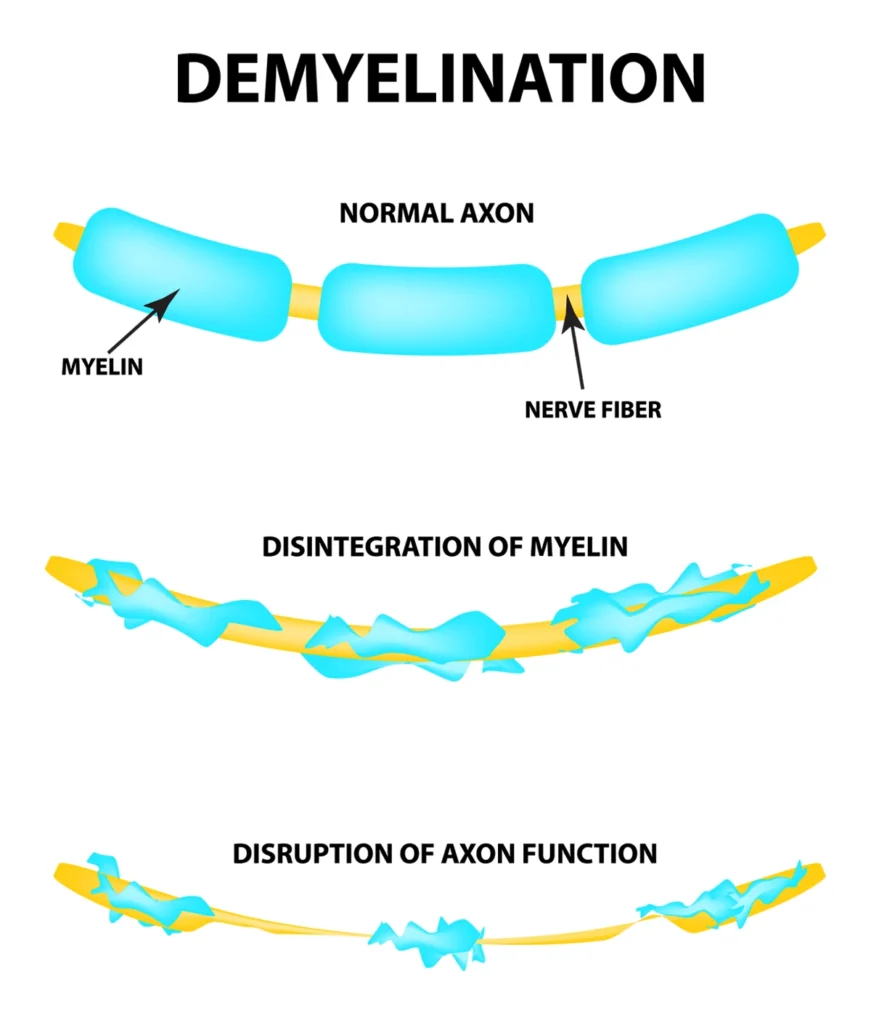
Although many demyelinating disorders are chronic, modern treatments can effectively control inflammation, reduce relapses, and slow disease progression. Management may include corticosteroids during acute attacks, disease-modifying therapies, physiotherapy, and long-term neurological follow-up.
With timely treatment and rehabilitation, many patients can maintain a good quality of life and functional independence.